
Troubleshooting YouTube Live streaming issues
Overview
This article explains how to troubleshoot common issues when publishing a Live Event from the Media Cloud to YouTube, including delayed broadcasts, unexpected interruptions, scheduled end times, and encoder connection issues.
When to use this article
Use this article when:
Your Live Event does not appear on YouTube as expected.
Your YouTube Live broadcast stops unexpectedly.
Your broadcast ends before your presentation or event is finished.
Your stream works through Lightcast but not on YouTube.
You want to understand whether to send your stream directly to YouTube or through the Media Cloud.
How YouTube Live publishing works
When you publish a Live Event from the Media Cloud to YouTube, your stream passes through three main stages:
Encoder: Sends your live video stream to the Media Cloud.
Media Cloud: Receives the stream and distributes it to YouTube and any other configured destinations.
YouTube: Receives the stream and makes it available to viewers through its own live player.
For Simulated Live Events, the Media Cloud uses a previously uploaded video as the source instead of receiving a live stream from an encoder.
When troubleshooting, identifying which stage is experiencing the issue is the most important first step.
If the Media Cloud is not receiving your stream: Check your encoder, internet connection, and stream configuration.
If the Media Cloud receives your stream but YouTube does not display it: Check your YouTube connection, publishing settings, and account permissions.
If your stream appears on YouTube but stops unexpectedly: Check the scheduled Live Event end time, stream continuity, and YouTube notifications.
Because YouTube controls playback and delivery on its platform, YouTube publishing can also be affected by YouTube's own processing, account permissions, platform requirements, policies, and availability.
For more information about YouTube publishing behavior, see Understanding how YouTube handles Live Events published from the Media Cloud.
For the complete YouTube connection and publishing workflow, see How to publish Live Events and Simulated Live Events to YouTube.
Quick troubleshooting checklist
Before troubleshooting a specific issue, check the following:
Is your encoder actively sending a stream to the Media Cloud? (For encoder-based Live Events.)
Is your Live Event active in the Media Cloud?
Is YouTube selected as a publishing destination?
Is the correct Google account and YouTube Channel connected?
Is the YouTube connection still authorized?
Is your YouTube Channel verified and enabled for live streaming?
Has the scheduled end time of your Live Event been reached?
Are there any errors, warnings, or restrictions displayed in YouTube Studio?
If your stream works normally through Lightcast but not on YouTube, focus on the YouTube publishing connection and account before changing your encoder settings.
Troubleshooting
The live stream does not appear on YouTube
A short delay may occur between the time your stream is sent from the Media Cloud and when it becomes available to viewers on YouTube.
YouTube must receive and process the incoming live stream before displaying it through its live player. Network conditions and YouTube's own processing can affect how quickly the broadcast appears.
For encoder-based Live Events, start your encoder several minutes before the scheduled event time to allow the Media Cloud to receive and establish a stable incoming stream.
If the stream still does not appear on YouTube:
Confirm that your encoder is actively sending the stream to the Media Cloud
Confirm that the correct Live Event is scheduled and active in the Media Cloud.
Confirm that YouTube is selected as a publishing destination.
Confirm that the correct Google account and YouTube Channel are connected.
Confirm that the YouTube connection is still authorized.
Confirm that the YouTube Channel is verified, enabled for live streaming, and meets YouTube's current live streaming requirements
If live streaming was recently enabled for the first time, allow up to 24 hours for YouTube to activate the feature.
Check YouTube Studio for any account, permission, content, or live streaming notifications.
Check your broadcast in YouTube Studio
Open YouTube Studio and sign in to the Google account that manages your YouTube Channel.
Click Create → Go live to open the Live Control Room.
Locate your scheduled broadcast, if available, under Manage.
Review the stream status and any errors or warnings displayed by YouTube.
These messages can help you determine whether YouTube is receiving the stream and whether any platform restrictions or technical issues are affecting the broadcast.
For more information, see YouTube Help: Live streaming error messages.
If the Media Cloud is not receiving the source stream, see How to set up and ingest a Live Event stream and Troubleshooting encoder connection and buffering issues.
If the stream is working through your Lightcast destinations but does not appear on YouTube, the issue may be specific to the YouTube publishing connection, account permissions, or YouTube's platform.
The YouTube Live broadcast ends unexpectedly
If your YouTube Live broadcast ends unexpectedly, first check the scheduled end time of the Live Event in the Media Cloud.
The YouTube broadcast is expected to end shortly after the scheduled event end time. If your event may run longer than expected, include additional time when scheduling the event.
If the scheduled end time has not been reached, check the following:
Confirm that your encoder is still sending the stream to the Media Cloud.
Check your encoder and internet connection for interruptions.
Confirm that the Live Event is still active in the Media Cloud.
Check whether the stream is continuing normally on your other Lightcast destinations.
Confirm that the YouTube connection is still authorized.
Open YouTube Studio and review the broadcast status in the Live Control Room.
Check YouTube for any notification related to the broadcast, account, permissions, content, or platform requirements
For help troubleshooting the encoder or connection to the Media Cloud, see Troubleshooting encoder connection and buffering issues.
YouTube controls its own live streaming platform and may restrict, interrupt, or end a broadcast based on its current policies, requirements, or technical limits.
If the stream continues normally through Lightcast but has ended on YouTube, the issue may be specific to YouTube publishing.
The Live Event runs past its scheduled end time
The YouTube Live broadcast is expected to end shortly after the scheduled end time configured for your Live Event in the Media Cloud.
If your Live Event continues beyond its scheduled end time, YouTube publishing may stop even if your encoder is still sending the stream.
To avoid this:
Schedule additional time when creating your Live Event.
Allow extra time for events that may run longer than expected.
Verify the scheduled start and end times before your event begins.
Make any necessary schedule changes more than 5 minutes before the scheduled start time.
Important: Once a Live Event has started, you can still open the event and view its settings. However, you can. no longer modify any event settings, including the scheduled end time.
Please note that editing also becomes unavailable within 5 minutes of the scheduled start time. We recommend making all necessary changes well in advance of your event.
For instructions, see How to schedule a Live Event.
For timing information about Simulated Live Events, see How to schedule a Simulated Live Event.
The YouTube connection is no longer authorized
If your YouTube connection is no longer authorized, the Media Cloud may be unable to publish your Live Event to YouTube.
To reauthorize the connection, disconnect the YouTube account from the Live Events Channel and reconnect it through the YouTube publishing workflow.
Important: The YouTube connection applies to the entire Live Events Channel. Disconnecting the account may affect other scheduled events in the same Channel that are configured to publish to YouTube. Review your upcoming events before making changes.
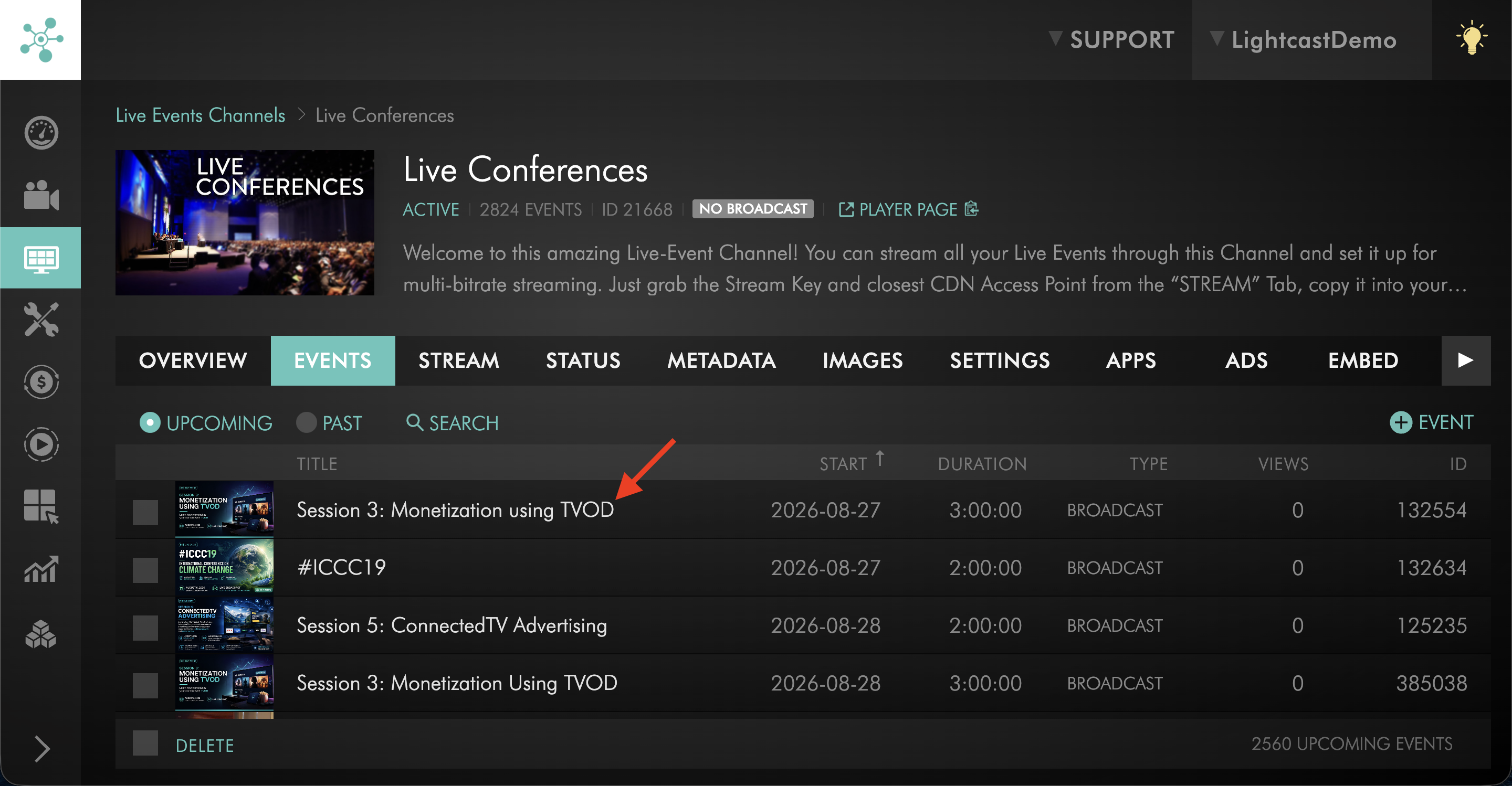
Step 1
Open the scheduled Live Event in the Media Cloud.
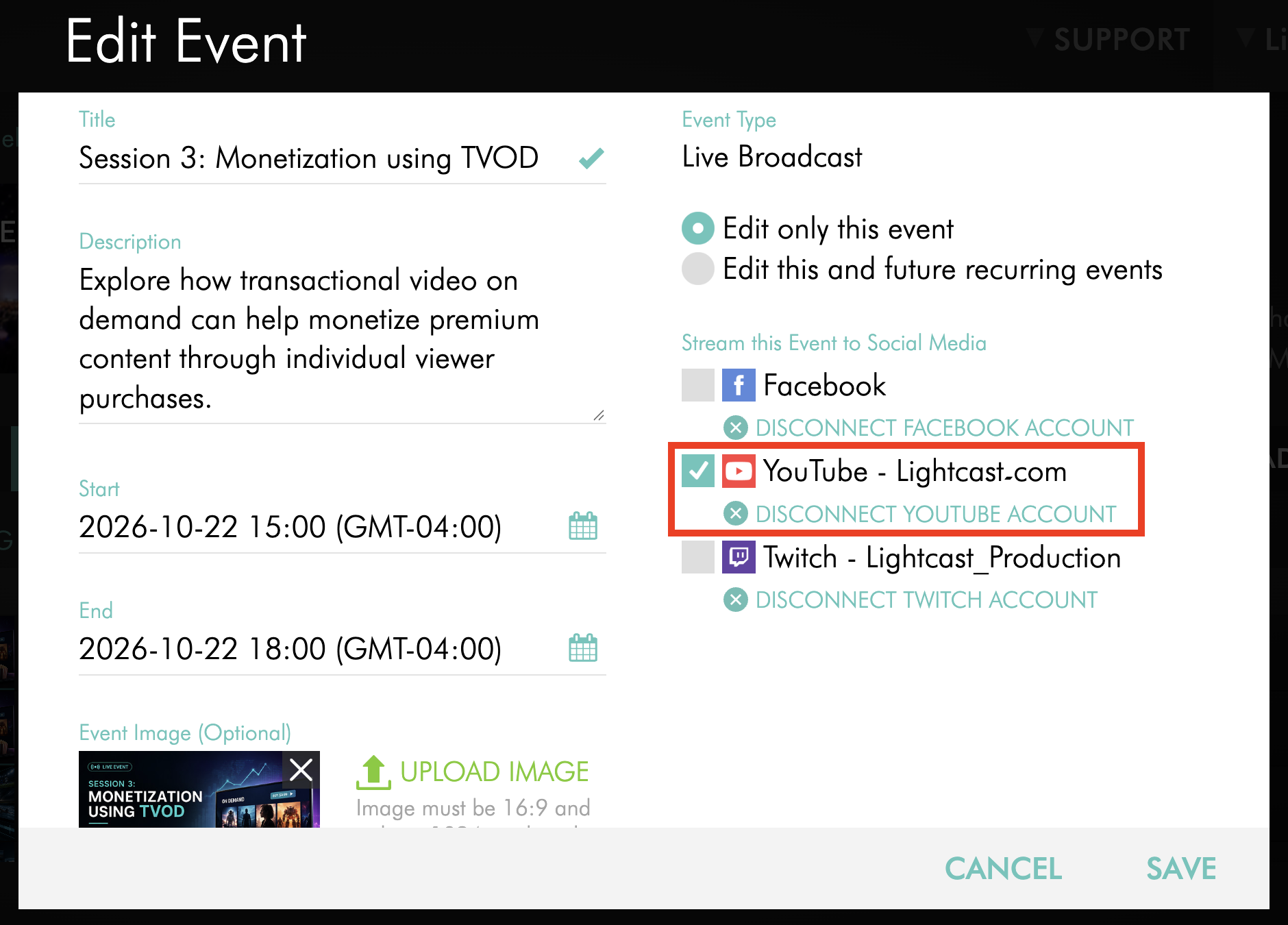
Step 2
Locate the YouTube publishing option.
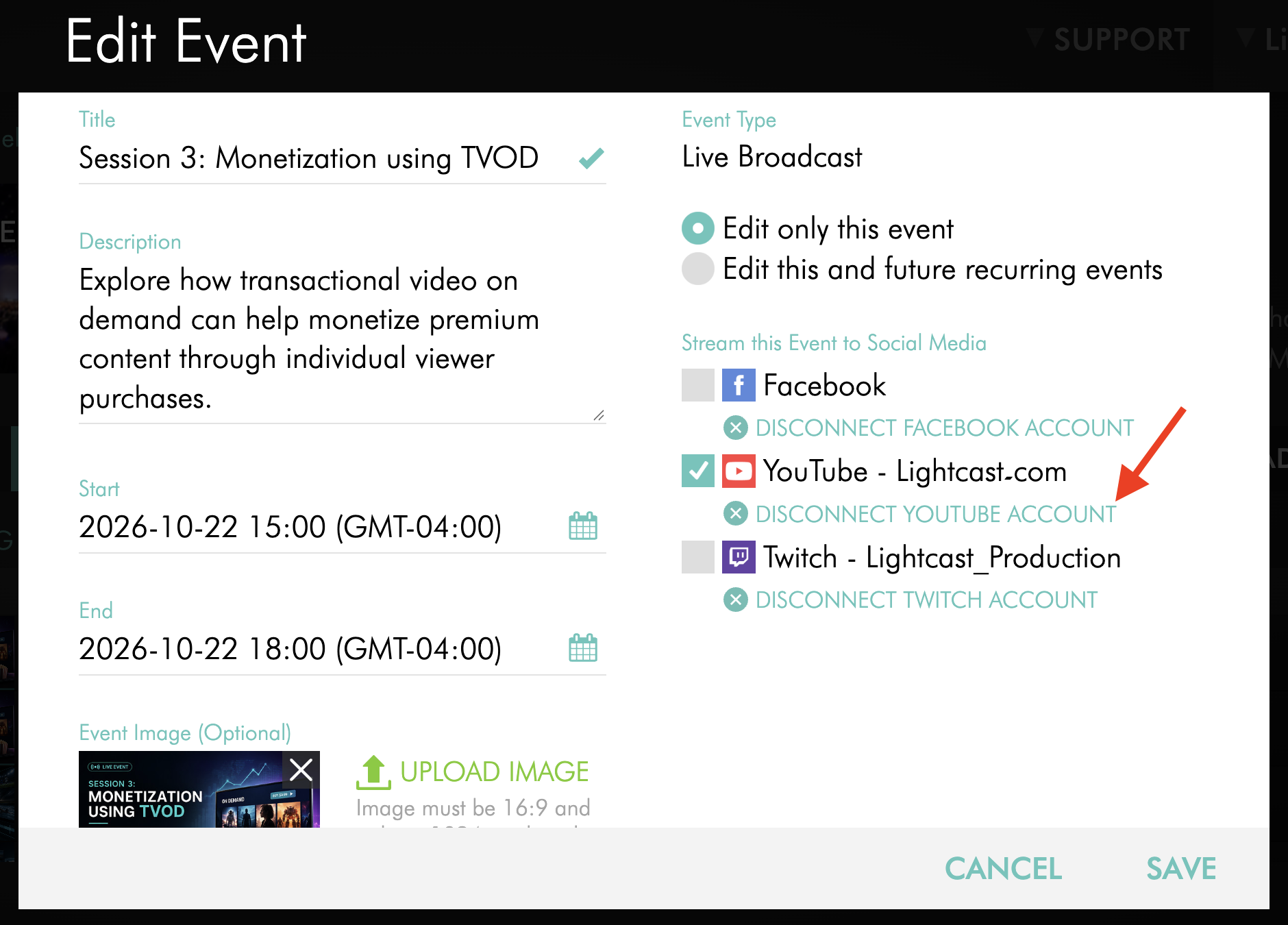
Step 3
Click DISCONNECT YOUTUBE ACCOUNT.
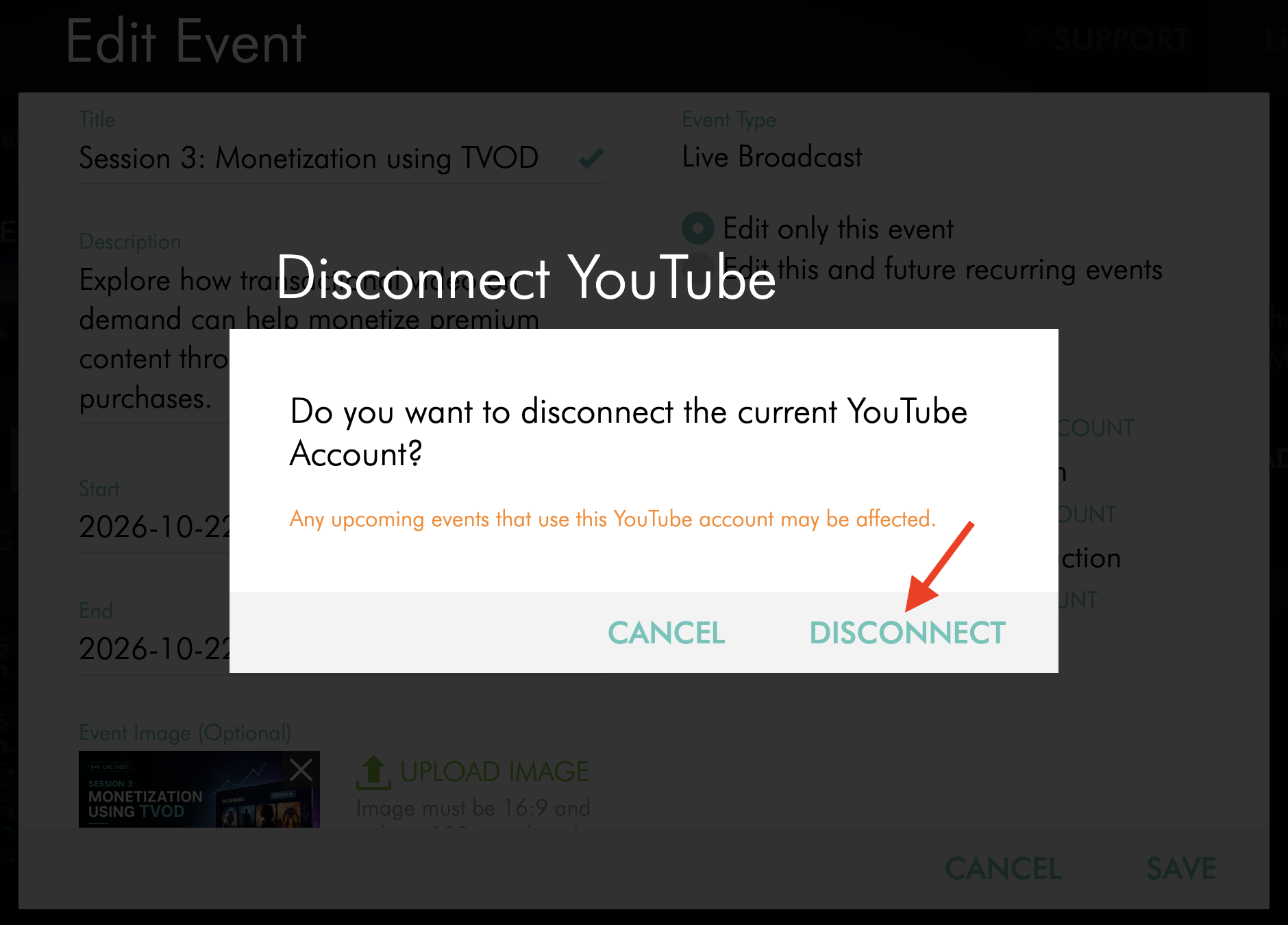
Step 4
When the confirmation window appears, click DISCONNECT.
Step 5
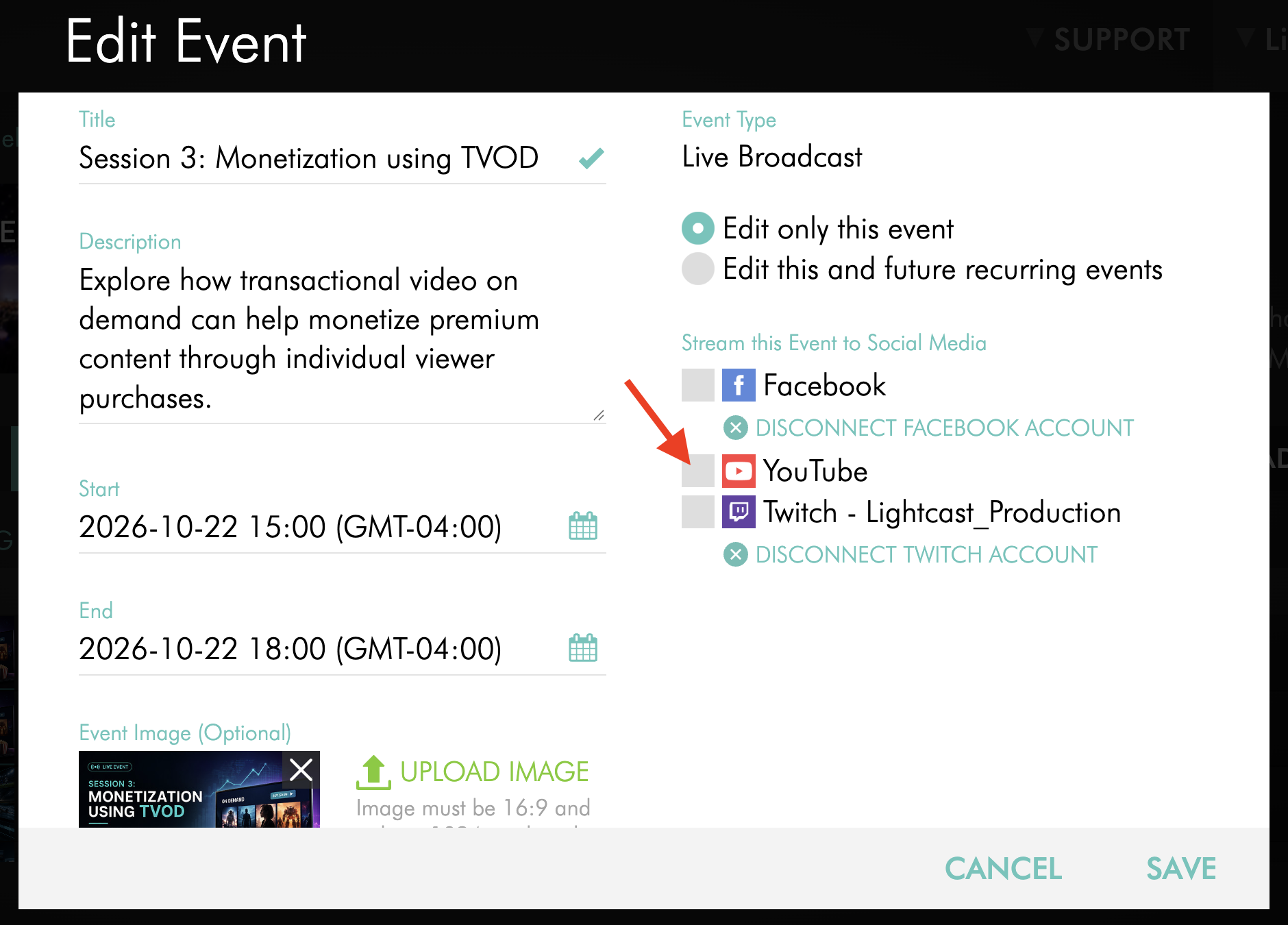
Select YouTube again and sign in with the Google account that manages your YouTube Channel.
If Google automatically reconnects the previous account, sign out of that Google account in your browser before reconnecting.
Step 6
Follow the Google authorization prompts and approve the necessary permissions.
Step 7
Click ADD or SAVE to save the event settings.
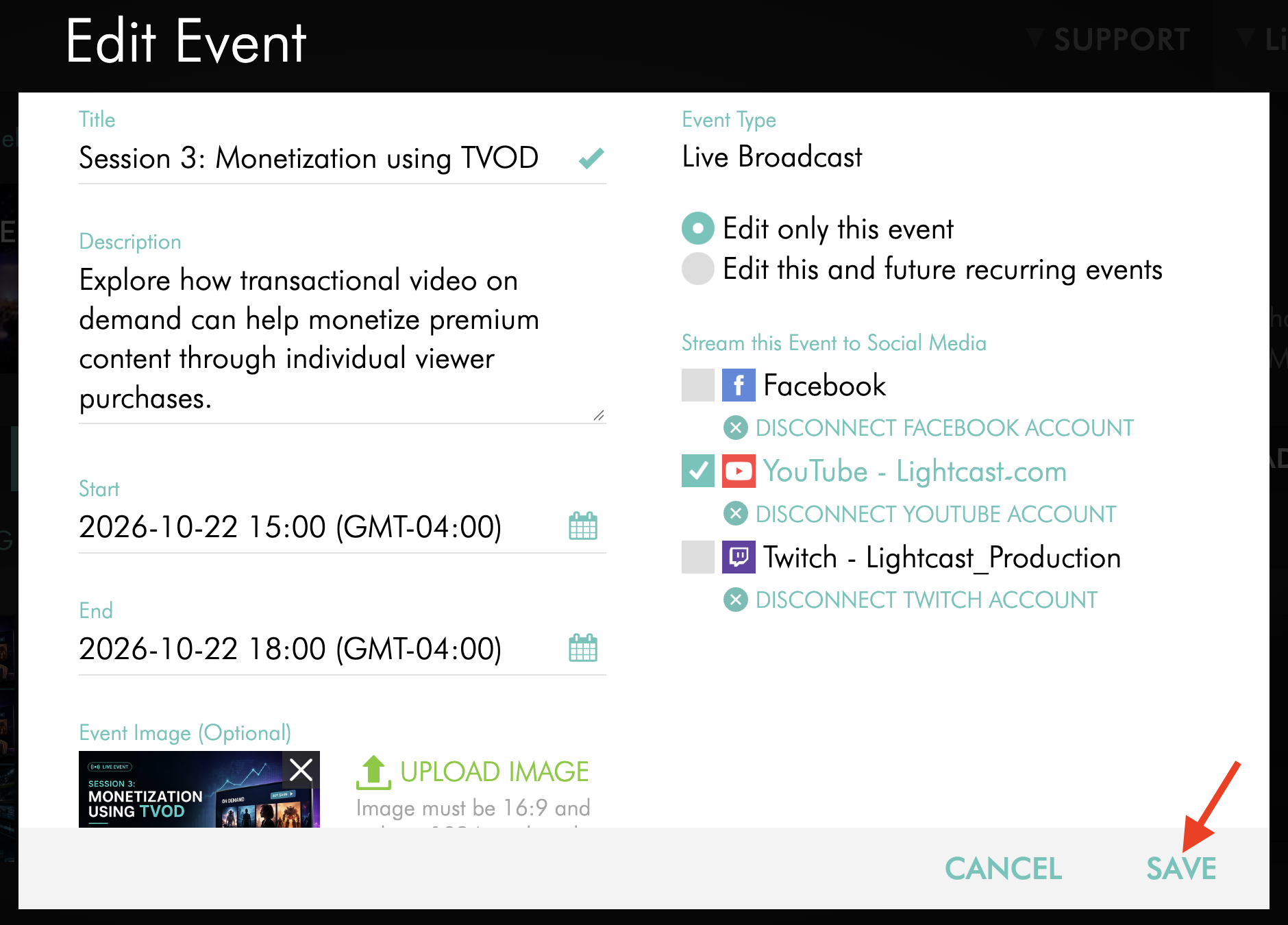
For the full connection workflow, see How to publish Live Events and Simulated Live Events to YouTube.
Important: Keep in mind that Live Event settings cannot be edited once the event has started or if the event starts in less than 5 minutes. Reauthorize your YouTube connection well in advance of the scheduled broadcast.
Before contacting Customer Support
If you are unable to resolve the issue using the troubleshooting steps above, contact Customer Support.
To help our team investigate your issue, please provide:
The name of the affected Live Event.
The date and approximate time the issue occurred, including your time zone.
A description of the issue, such as whether the broadcast did not appear on YouTube or ended unexpectedly.
Whether the stream was working normally through your Lightcast destinations.
Whether you were using an encoder-based Live Event or a Simulated Live Event.
Any error messages or notifications displayed in the Media Cloud or YouTube Studio.
Screenshots of relevant errors, if available.
Providing this information will help our Customer Support team identify the issue more efficiently.
FAQs
Why is my live stream working through Lightcast but not on YouTube?
YouTube receives the live stream from the Media Cloud but controls playback and delivery on its own platform.
If the stream is working normally through your Lightcast destinations but not on YouTube, confirm that the correct YouTube account is connected, confirm that the connection is still authorized, and check YouTube for any account, permission, content, or platform-related notification.
If the issue continues, contact Customer Support.
Can YouTube end my live broadcast?
Yes. YouTube controls its own live streaming platform and may restrict, interrupt, or end a broadcast based on its current policies, platform requirements, or technical limits.
Publishing a Live Event successfully through the Media Cloud does not override YouTube's requirements.
For more information about YouTube publishing behavior, see Understanding how YouTube handles Live Events published from the Media Cloud.
What happens when my Live Event reaches its scheduled end time?
The YouTube Live broadcast will end shortly after the scheduled event end time.
If your event may run longer than planned, include additional time when scheduling the Live Event.
For more information, see How to schedule a Live Event.
Should I restart my encoder if the YouTube broadcast stops?
Only restart your encoder if the encoder has stopped sending the source stream or you are troubleshooting an encoder connection issue.
If the Media Cloud is still receiving the stream and it is working on other Lightcast destinations, restarting the encoder may unnecessarily interrupt those destinations.
If only the YouTube broadcast is affected, check the YouTube publishing connection and YouTube account for additional information before restarting your encoder.
Should I send one stream to the Media Cloud and another directly to YouTube?
No. When you are using the Media Cloud to publish a Live Event to YouTube, send your source stream to the Media Cloud and allow the Media Cloud to distribute it to YouTube and your other configured destinations.
This keeps the publishing workflow centralized and avoids sending multiple separate streams from your encoder.
Where should I manage a YouTube Live Event created through the Media Cloud?
Manage the scheduled Live Event and its YouTube publishing settings from the Media Cloud.
This keeps the Media Cloud event configuration and YouTube publishing workflow together.
For instructions, see How to publish Live Events and Simulated Live Events to YouTube.