
How to set up your Video On-Demand (VOD) Channel
Overview
This article explains how to set up your Video On-Demand (VOD) Channel in the Media Cloud. It covers how to add or update the Channel Name, Description, Language, and thumbnail image, and how to continue to optional Sub-Channel setup if needed.
How it works
Your Video On-Demand (VOD) Channel is the main location where your videos are organized and displayed across your apps and supported publishing platforms. Because videos can be assigned to Channels during the upload process, it is best to complete your Channel setup before uploading content.
Learn more about the purpose of Channels and how they are used here: Understanding Video On-Demand (VOD), Audio On-Demand (AOD), and LIVE Channels (and Channel IDs)
The main parts of Channel setup are the Channel Name, Description, Language, thumbnail image, and optional Sub-Channels. These settings affect how your Channel appears throughout your Media Cloud account and across your connected apps.
Your Channel name should clearly reflect the type of content in the Channel. A concise name is usually easier for viewers to recognize across devices and layouts.
Your Channel description should explain what viewers can expect from the Channel. If you want the full description to display without a Read More button, the recommended maximum length is 120 characters for OTT Apps such as Roku, Fire TV, Apple TV, Android TV, Samsung TV, and LG TV. For iOS and Android Mobile Apps, the recommended maximum length is 70 characters.
It is also important to avoid special characters that may affect how the description displays on some platforms. For example, single quotation marks can cause descriptions to be cut off on some devices. If quotation marks are needed, use standard double quotation marks instead.
A Channel thumbnail helps viewers identify the Channel more easily and supports a more polished presentation across your connected platforms.
If you expect a Channel to hold more than 30 media items, Sub-Channels can help you organize the content more clearly for both account management and viewer navigation in your apps.
Additional Channel settings are also available, such as publishing, sharing, and player display options. These settings can be configured separately after the main Channel setup is complete.
Instructions
Step 1
Log in to your Media Cloud account.
Step 2
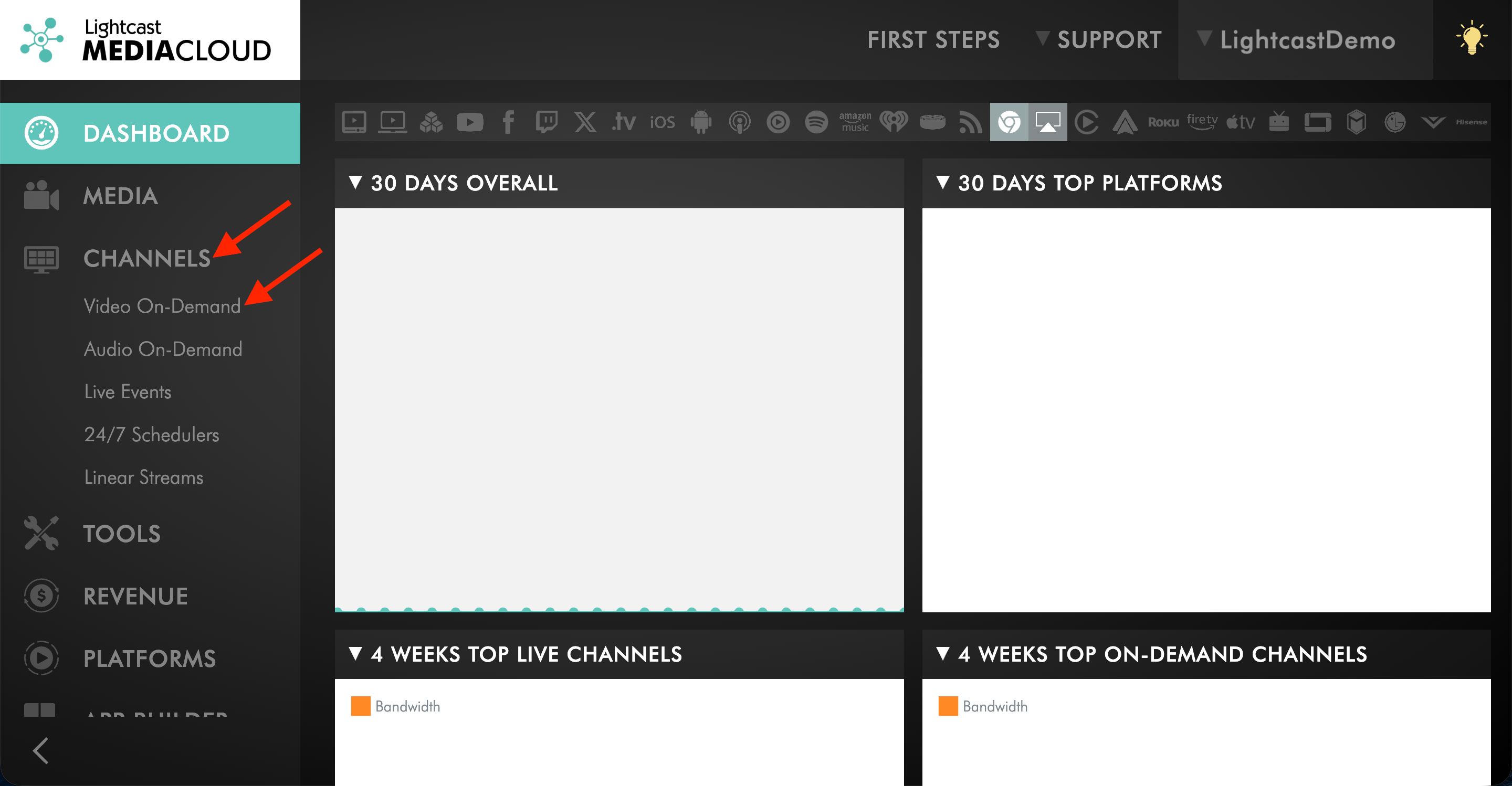
Go to CHANNELS and click Video On-Demand.
Step 3
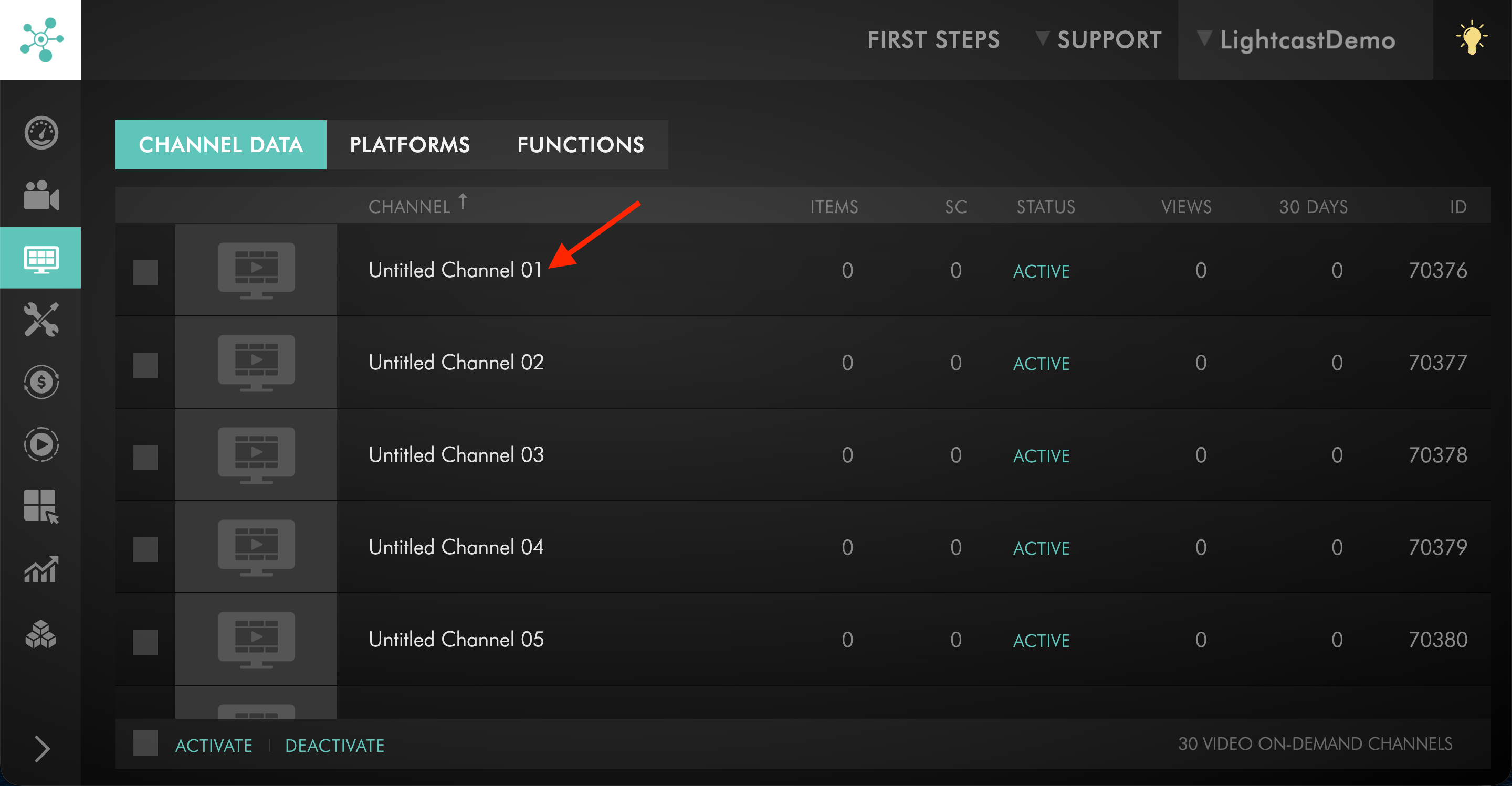
Select the VOD Channel you want to set up.
Step 4
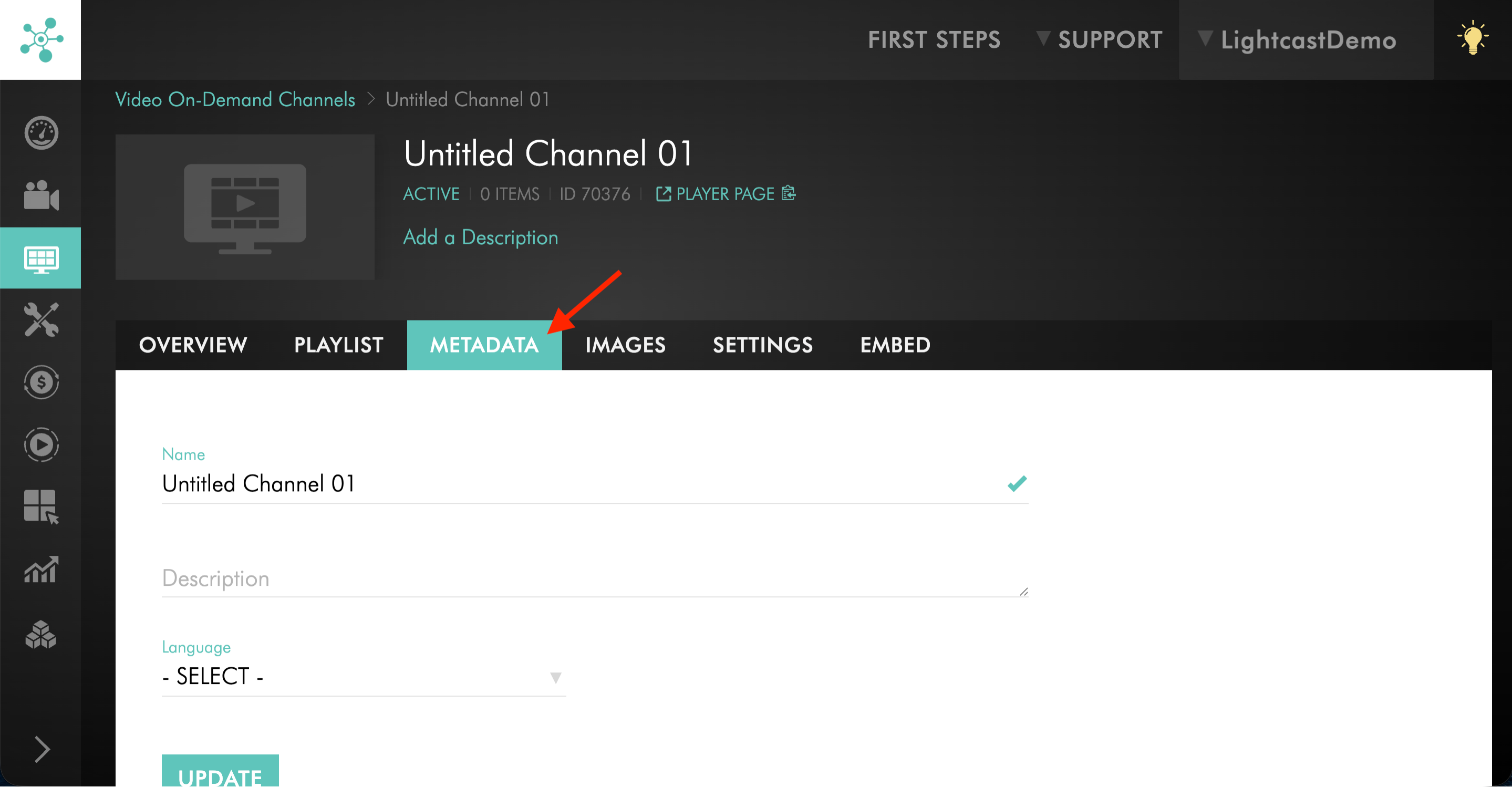
Switch to the METADATA tab.
Step 5
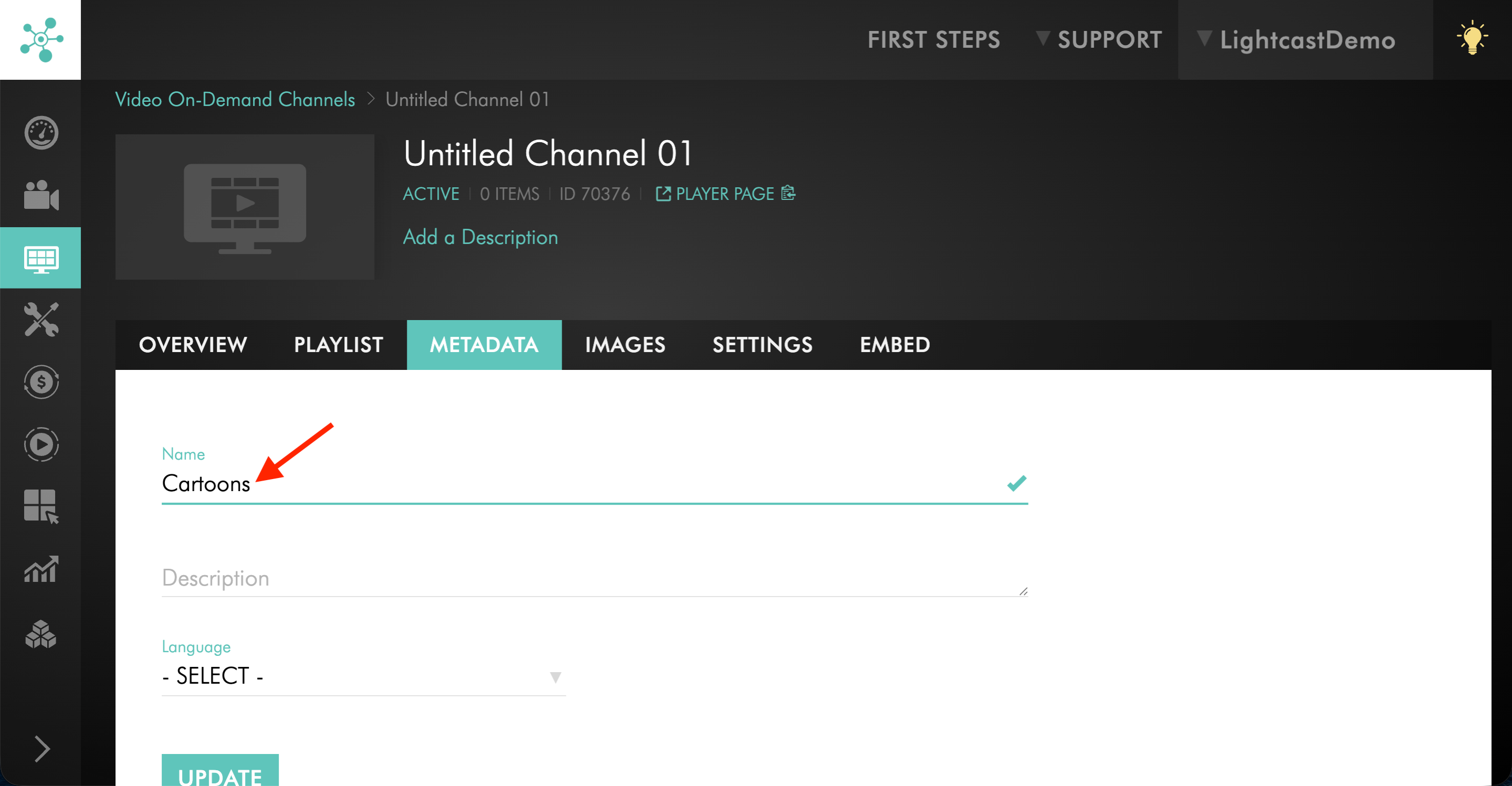
In the Name field, enter a clear and descriptive name for the Channel.
Use a short, content-specific name that helps viewers understand what the Channel includes.
Step 6
In the Description field, add a description for the Channel.
The description should clearly explain what the Channel includes and what viewers can expect.
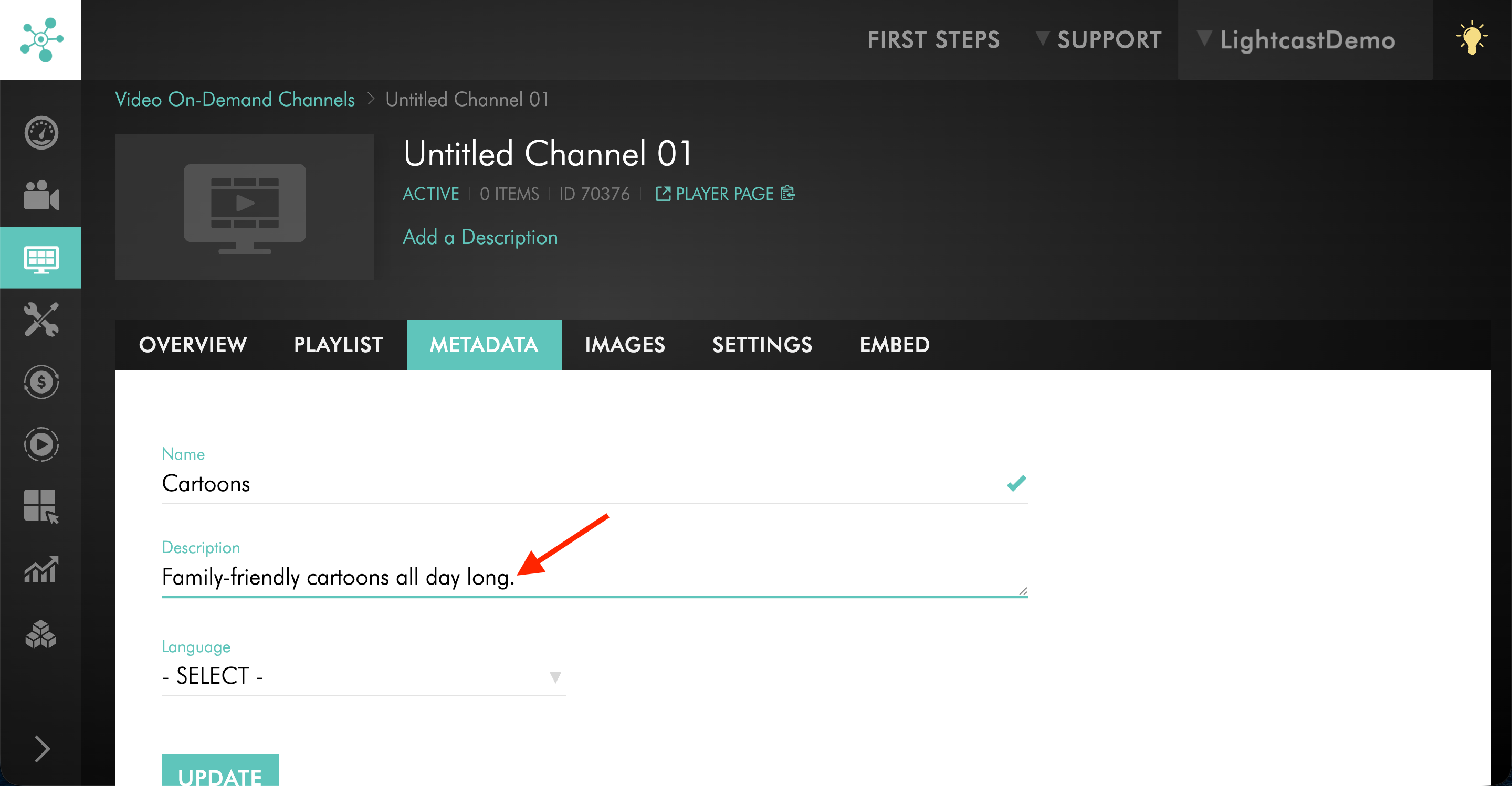
Step 7
Review the description before saving it.
Avoid special characters that may affect how the description displays on some platforms. If quotation marks are needed, use standard double quotation marks instead of single quotation marks.
If you want the full Channel description to display without a Read More button, keep it within these recommended limits:
OTT Apps: 120 characters maximum
iOS and Android Mobile Apps: 70 characters maximum
Step 8
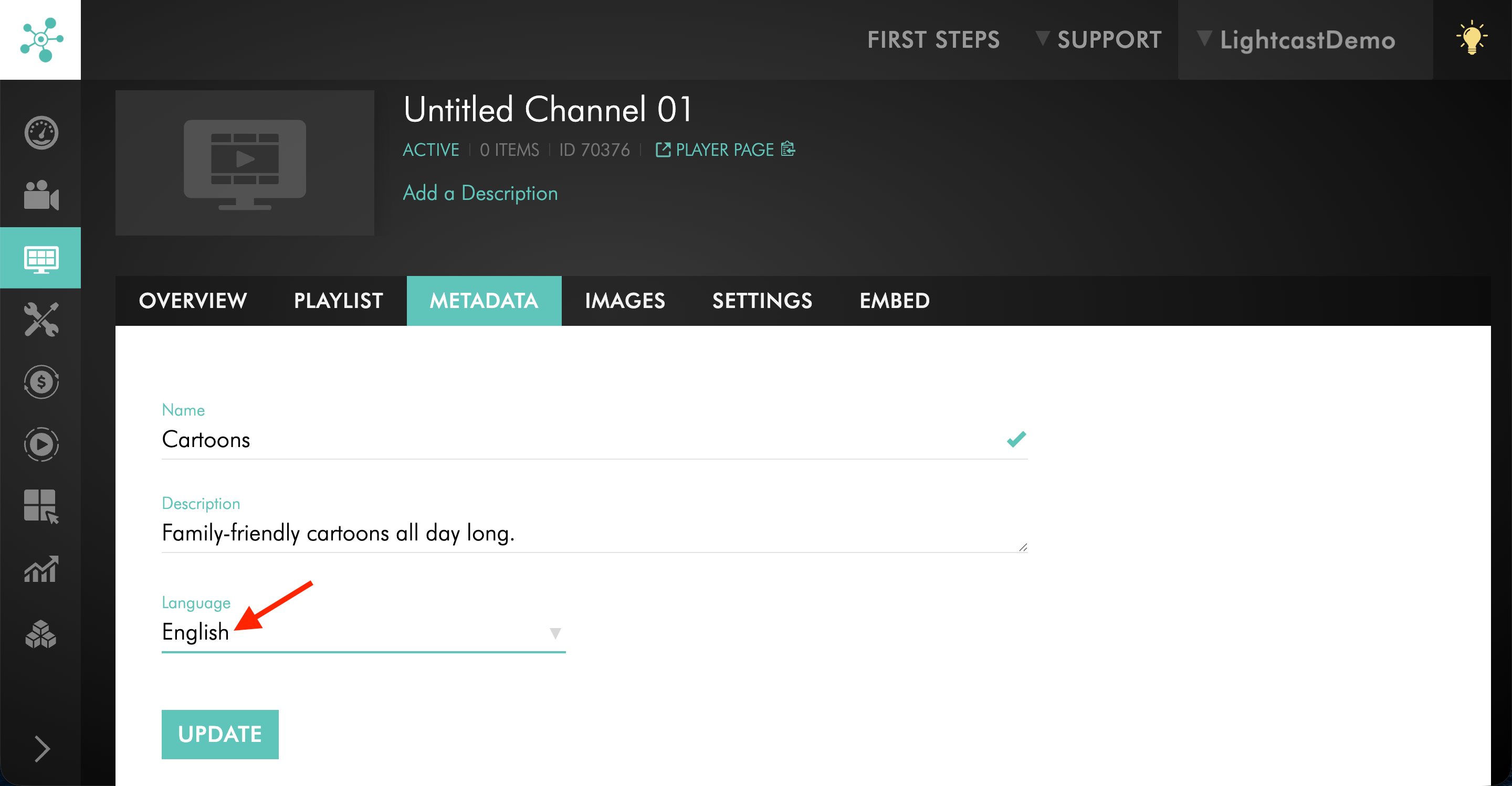
In the Language field, select the primary language for the Channel content.
Step 9
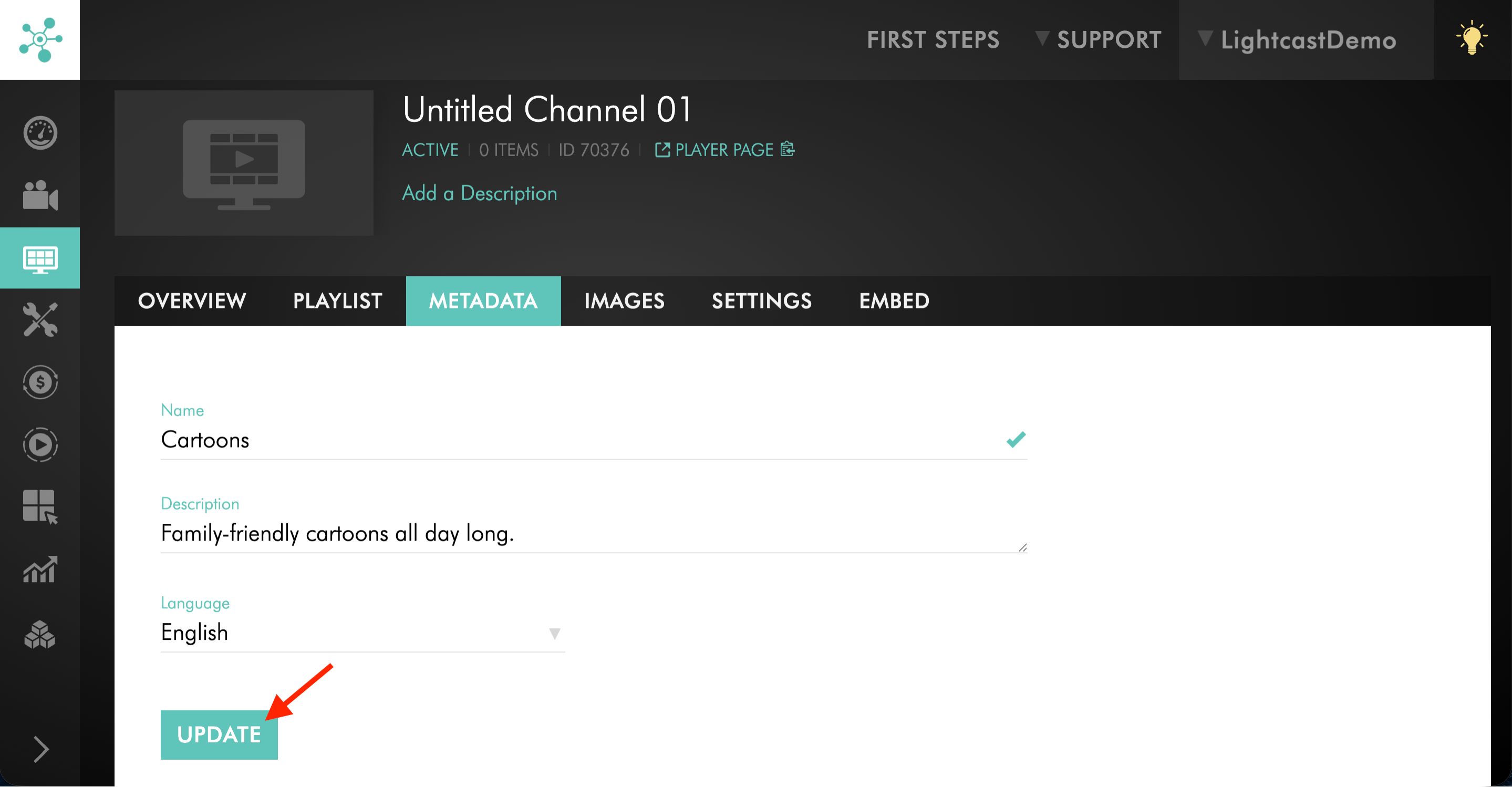
Click UPDATE to save the changes made to the Name and Description.
Step 10
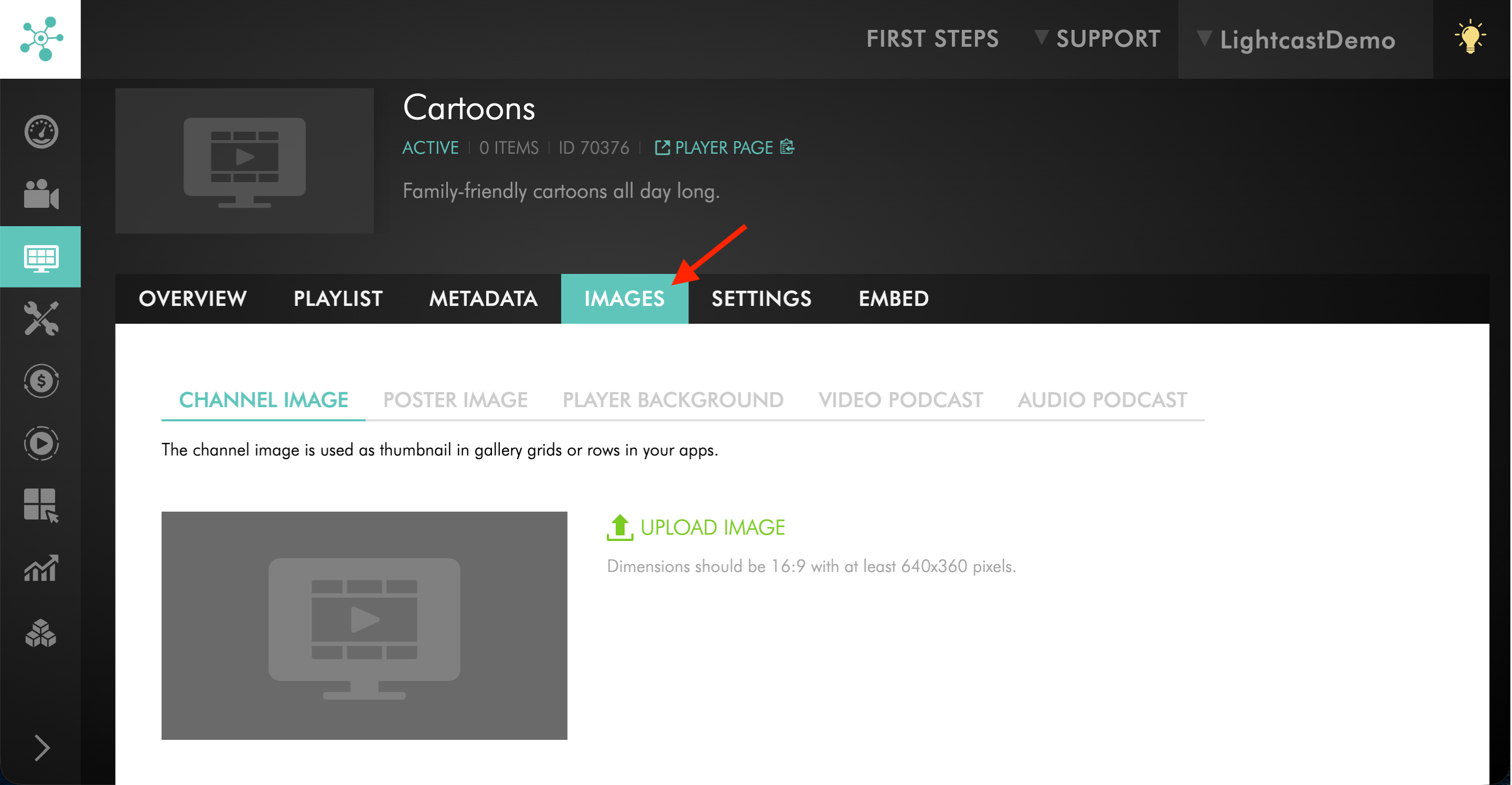
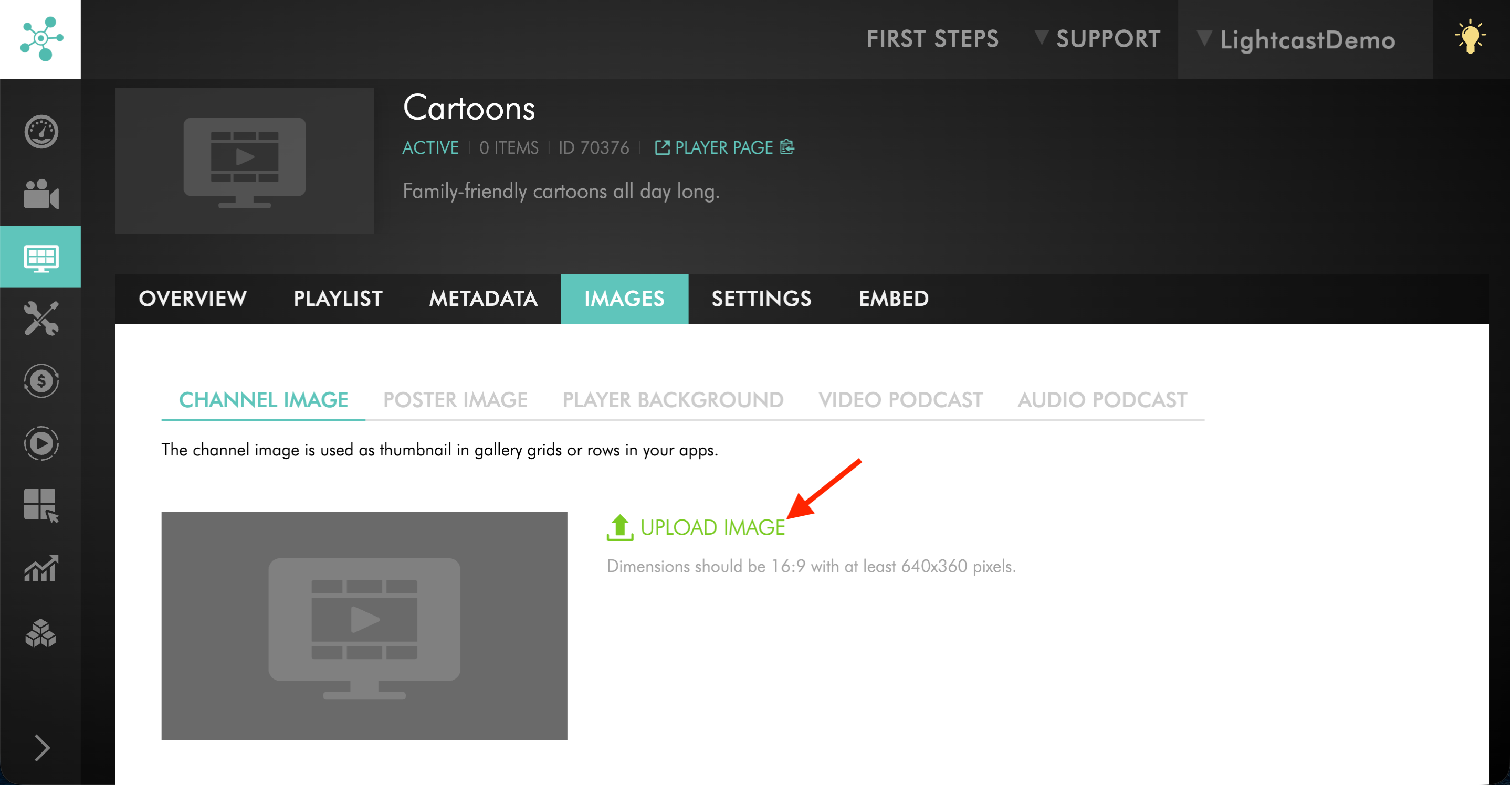
Switch to the IMAGES tab.
Step 11
Click UPLOAD IMAGE to upload a Channel thumbnail image.
Step 12
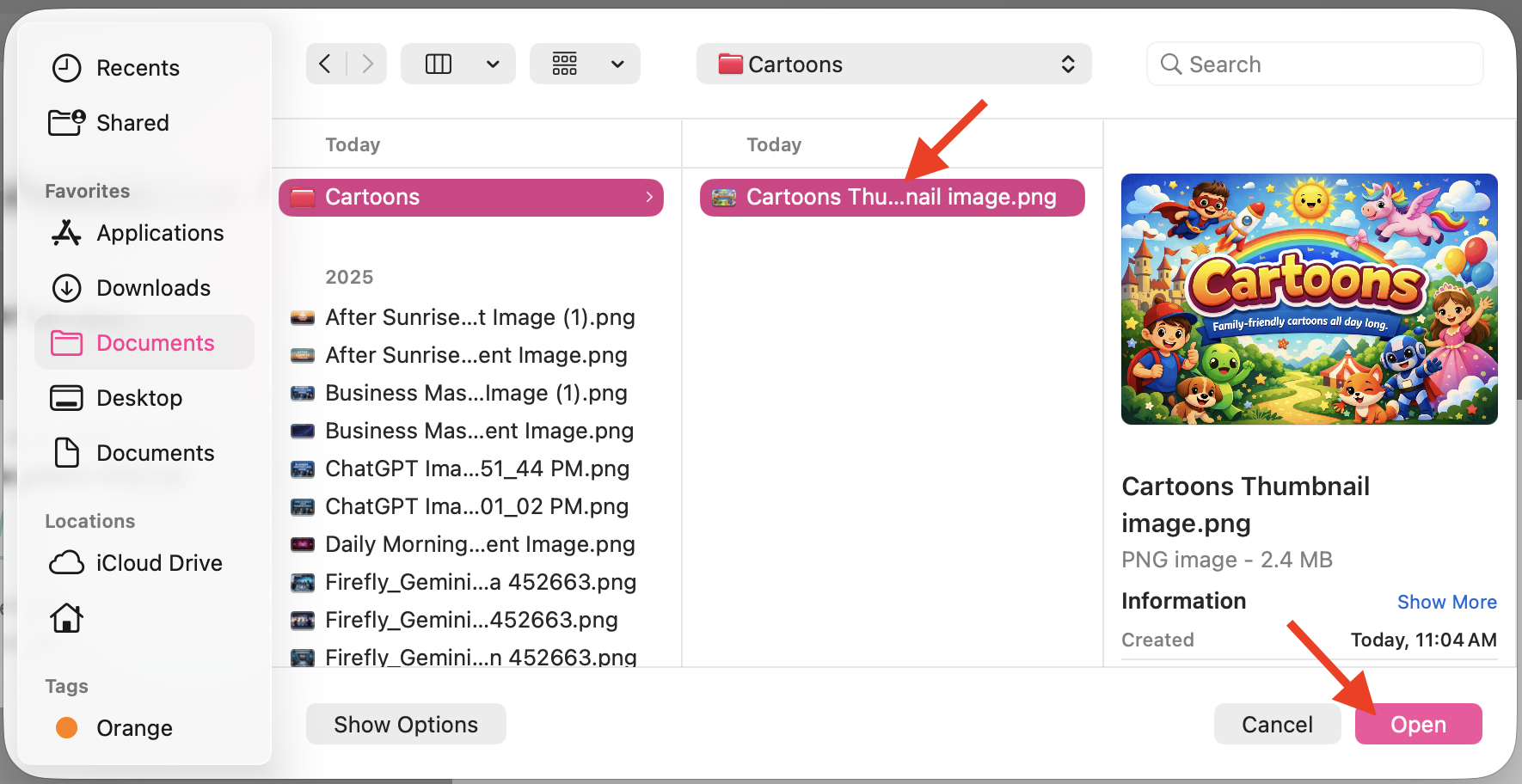
In the pop-up window, select an image that matches the Channel’s branding, theme, or content.
Step 13
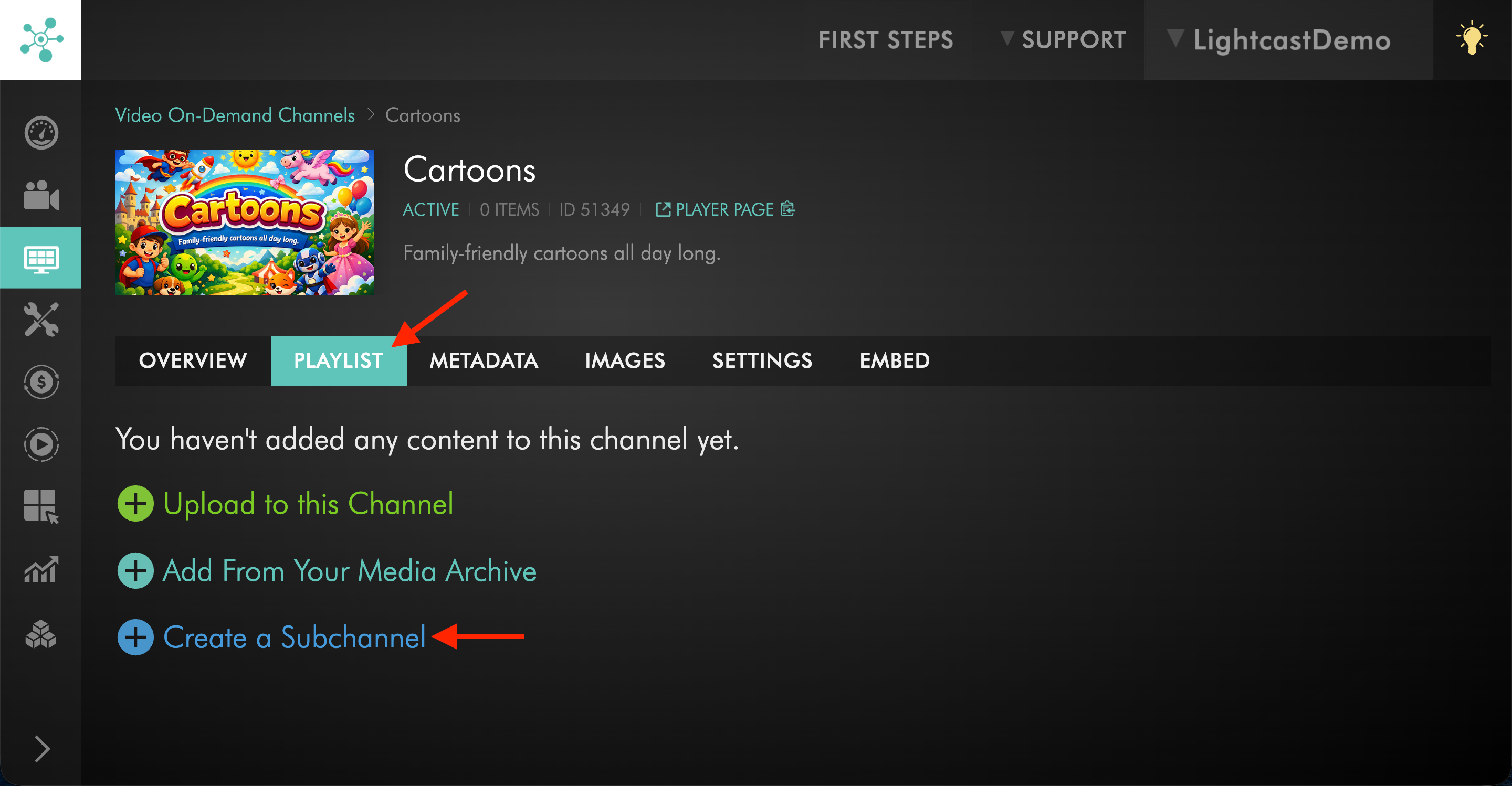
Optional: To set up Sub-Channels, switch to the PLAYLIST tab.
Sub-Channels are recommended if you plan to assign more than 30 media items to the Channel.
To learn more about how to set up Sub-Channels, see: How to create and organize Sub-Channels in the Media Cloud
FAQs
Why should I set up my Video On-Demand Channel before uploading videos?
Setting up the Channel first allows you to assign videos to the correct Channel while uploading them. This helps keep your content organized from the beginning and prepares your Channel for publishing.
What makes a good Channel name?
A good Channel name clearly reflects the type of content in the Channel. A short, descriptive name is usually easier for viewers to recognize across different platforms.
What is the recommended character length for a Channel description?
If you want the full Channel description to display without a Read More button, keep the description within these recommended limits:
OTT Apps: 120 characters maximum
iOS and Android Mobile Apps: 70 characters maximum
Why is my Channel description getting cut off on some platforms?
This can happen when the description is too long or includes unsupported special characters. Single quotation marks can also cause display issues on some platforms. Using standard double quotation marks instead can help the description display properly.
Why is your Channel thumbnail important?
A Channel thumbnail helps your Channel look more professional and makes it easier for viewers to identify your content across your connected platforms.
When should I use Sub-Channels?
Sub-Channels are helpful when you plan to assign more than 30 media items to a single Channel. They make larger content libraries easier to organize and easier for viewers to browse.
Video: How to Rename a VOD Channel
Understanding Video On-Demand (VOD), Audio On-Demand (AOD), and LIVE Channels (and Channel IDs)
How to upload and assign videos to your VOD Channel
LightcastDRM explained
How to publish to Cross.tv
Understanding Channel publishing and sharing settings